Tesla Model 3 vs BYD Seal
A Multi-Dimensional Long-Form Review Confronting the Paradigms of American Minimalist Innovation and Chinese Structural Integration
Automotive Advertising Container (728x90 Billboard Banner)
This contextual placeholder yields dynamic script execution upon deployment of official Google AdSense code blocks.
1. The Secular Shift in Global Electrification
The global automotive landscape is experiencing its most profound disruption since the implementation of Henry Ford’s moving assembly line. Electrification has transcended its initial phase as an environmental niche, transforming instead into the primary battleground for computational sovereignty, software-defined mechanical architecture, and chemical cell superiority. For nearly a decade, the premium compact electric sedan segment sat unchallenged under the uncontested hegemony of the Tesla Model 3. Conceived as the vehicle that democratized long-range battery electric mobility, the Model 3 disrupted traditional luxury internal combustion legacy frameworks worldwide.
However, the global automotive paradigm is no longer unipolar. Emerging from the highly competitive Chinese industrial ecosystem, BYD (Build Your Dreams) has pivoted from a humble cell fabrication house into a dominant vertically integrated automotive giant. The arrival of the BYD Seal, a flagship within the manufacturer’s ocean-themed series, represents the first direct, uncompromised structural challenge to the Model 3’s design philosophy. Rather than mimicking the minimalist playbook established by Silicon Valley, the BYD Seal leverages complex cell-to-body manufacturing matrices and distinct luxury appointments designed to satisfy drivers demanding a classical automotive feel paired with advanced battery propulsion. This comprehensive analysis evaluates both machines across deep technical engineering thresholds, user ergonomics, charging topography, and regional ownership parameters.
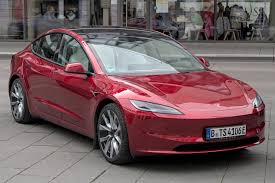
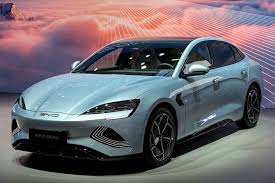
2. Powertrain Architecture & Battery Cell Chemical Engineering
Beneath the sheet metal of these premium sedans lie radically contrasting interpretations of electrochemical power storage and electric motor management. Tesla relies heavily on highly optimized cylindrical cell configurations, specifically utilizing either lithium iron phosphate (LFP) chemistries for entry level configurations or nickel-manganese-cobalt (NMC) formulations for higher performance variants. The Model 3 features an extraordinarily sophisticated thermal management matrix, using a patented octopus-style cooling valve system that actively scavenges heat generated from the cabin computer, permanent magnet drive units, and environmental ambient parameters to condition the battery cell cluster before high-rate charging events occur.
Conversely, the BYD Seal bases its entire commercial validity on the revolutionary proprietary Blade Battery system. Utilizing a safe lithium iron phosphate formulation, the Blade arrangement disposes of traditional modular structures completely. By modifying the physical cell shape into long, elongated structural beams arranged perpendicular to the direction of vehicle travel, BYD uses the battery packs themselves as structural floor reinforcement panels. This implementation, technically designated as Cell-to-Body (CTB) integration, optimizes packaging space efficiency by over 66% compared to ancestral modular layouts. During localized safety protocols, the Blade configuration survives intense nail penetration testing regimes without displaying thermal runaway or explosive off-gassing incidents, presenting an incomparable safety profile for consumers anxious about electrochemical stability.
Mechanical Power Units & Inverter Technology
In terms of propulsion mechanics, the rear-wheel-drive variants of both platforms leverage permanent magnet synchronous motors situated across the rear drive axle. Tesla utilizes hair-pin winding techniques coupled with custom Silicon Carbide (SiC) semiconductor power modules inside their inverters. This architectural choice minimizes switching resistance losses, translating into industry-leading conversion efficiencies reaching up to 97%. The BYD Seal counters with an integrated 8-in-1 electric powertrain assembly that physically fuses the vehicle control unit, battery management system, power distribution unit, drive motor, transmission system, and onboard inverter into a single mechanical housing block. This compact assembly eliminates external high-voltage copper wiring harnesses, improving total powertrain mass characteristics while delivering exceptional torque response times.
Comprehensive Side-by-Side Architectural Matrix
| Engineering Parameter | Tesla Model 3 (Rear-Wheel Drive) | BYD Seal (Design Trim) | Analytical Advantage Group |
|---|---|---|---|
| Structural Packing Typology | Pack Structural Module Insertion | Cell-to-Body (CTB) Structural Floor | BYD Seal (Spatial Engineering) |
| Inverter Semiconductor Material | Silicon Carbide (SiC) High Efficiency | Silicon Carbide Integrated Array | Tesla Model 3 (Efficiency Tuning) |
| Aerodynamic Efficiency Index | 0.219 Cd | 0.218 Cd | Tie (Negligible Margin) |
| Infotainment Central Processor | AMD Ryzen Custom Compute Node | Qualcomm Snapdragon Automotive Chip | Tesla Model 3 (Graphic Rendering) |
| Thermal Runaway Mitigation | Active Pyrotechnic Disconnect Circuits | Intrinsically Safe Blade Geometry | BYD Seal (Physical Protection) |
Content-Adaptive Advertisements (300x250 Medium Rectangle Grid)
Recommended algorithmic ad unit deployment spot designed for optimal click-through telemetry without alienating user scrolling mechanics.
3. Interior Architecture, Interface Ergonomics, & Software Hegemony
Step inside the Tesla Model 3, and you enter a temple of absolute digital reductionism. Tesla has stripped away every remnant of traditional automotive luxury, choosing to relocate windshield wiper toggles, climate ventilation directional veins, transmission engagement sticks, and side mirror control interfaces directly into the centrally positioned 15.4-inch high-definition touch display. This choice drastically cuts down manufacturing complexity but forces a reliance on continuous display operations. Powered by a dedicated AMD Ryzen system processor, the responsiveness of Tesla’s customized Linux operating system remains fluid, rendering sub-millisecond navigational panning, seamless multi-finger pinch actions, and stunning real-world physics visualizations of surrounding traffic.
The BYD Seal handles interior luxury through a vastly different design language. It caters directly to drivers who view the automobile as a physical environment rather than a rolling mobile computing device. The cabin of the Seal combines premium alcantara inserts, double-stitched leather surfaces, crystal-effect electronic gear switches, and a complete row of dedicated physical switchgear flanking the central tunnel area. Dominating the dash layout is a unique 15.6-inch infotainment console capable of mechanically rotating 90 degrees via an electronic motor button to display specialized navigation paths or vertically oriented mobile applications. While the underlying Qualcomm Snapdragon processing processor handles daily tasks efficiently, the user interface software suite displays visual fragmentation, occasionally showing rigid menu trees and less-than-perfect localization translations that feel unpolished compared to Tesla’s sleek interface design.
Automated Driver Assistance Suites
The autopilot discussion highlights the diverging corporate philosophies of these two manufacturers. Tesla uses a strict "Vision-Only" approach, completely removing ultrasonic parking sensors and radar modules from its production line. The vehicle relies solely on an array of external optical cameras processed by custom onboard Neural Networks. This software setup excels at anticipating highway traffic patterns and managing long-distance lane positioning, but can show sensitivity during blinding torrential downpours or heavy snowfall. BYD takes a more traditional approach by combining multi-spectrum radar detectors, sonic wave sensors, and optical camera modules. This array yields excellent adaptive cruise control safety buffers, though it lacks the predictive lane-weaving intelligence found in Tesla’s advanced software iterations.
4. Ride Dynamics, Chassis Engineering, & NVH Isolation
Out on open tarmac, these platforms showcase distinct driving dynamics. The Tesla Model 3 uses a stiffly sprung suspension layout featuring double-wishbone architecture on the front axle and an independent multi-link assembly out back. Combined with a steering rack that demands just two turns lock-to-lock, the Model 3 behaves with agile, sports-car-like precision. Directional inputs translate instantly into physical chassis rotations, making the car feel incredibly light on its feet. However, this sharpness comes with a clear trade-off: coarse asphalt surfaces and sharp potholes send noticeable vibrations straight through the floorboards and into the seat cushions, breaking the cabin's premium feel.
The BYD Seal leverages its Cell-to-Body architecture to achieve an exceptionally rigid torsional measurement rating of 40,500 Nm/degree. This structural stiffness allows BYD's chassis engineers to tune the suspension bushings and dampers for supple compliance without making the car feel loose around fast corners. The Seal glides over low-frequency road undulations with an isolated composure reminiscent of traditional European luxury sedans. Wind noise and road-induced tire roar are kept out of the cabin through acoustic dual-pane laminated glass panels installed on the front doors. The steering response feels weighted and predictable, prioritizing highway stability and passenger comfort over aggressive corner carving.
5. Charging Infrastructure and Real-World Grid Efficiency
An electric car can only be as effective as the charging network supporting it. Tesla’s Supercharger network remains one of the brand's most compelling selling points. Drivers can plug into any Supercharger stall worldwide and initiate high-rate charging without needing localized smartphone apps, RFID credit membership tags, or third-party validation steps. The entry-level Model 3 sustains an optimized 170 kW DC charging curve, whereas the dual-motor variants max out at a rapid 250 kW. This means the car can add up to 275 kilometers of driving range in a quick fifteen-minute stop.
The BYD Seal utilizes an innovative high-voltage boost charging system. By leveraging the car’s electric motor windings as an inductor element within the internal step-up circuit, the Seal can convert older 400V DC public infrastructure outlets into stable 800V charging performance. This setup allows the car to maintain a flat 150 kW charging profile even as the battery fills up. However, outside of its home market, the Seal must share uncoordinated public networks. This can sometimes result in handshake errors, unexpected charging terminations, and erratic speeds caused by worn-out third-party station hardware.
✅ Tesla Model 3 Engineering Merits
- Unrivaled efficiency indexing averaging less than 13.5 kWh per 100 kilometers.
- Regular Over-The-Air (OTA) updates continuously improve braking metrics and thermal algorithms.
- Massive native front-trunk cargo storage volume totaling 88 liters.
- Exceptional residual market valuation retention curves over multi-year cycles.
❌ Tesla Model 3 Architectural Flaws
- Complete absence of tactile switches forces dangerous display glance adjustments while driving.
- Stiff suspension tuning creates a harsh ride over compromised city streets.
- Lack of an electronic instrumentation display directly behind the steering wheel axis.
✅ BYD Seal Engineering Merits
- Cell-to-Body layout reduces floor thickness while improving cabin vertical headroom.
- Blade battery technology survives severe physical punctures without catching fire.
- Luxurious cabin materials create an upscale, premium seating environment.
- Highly effective sound deadening materials minimize high-frequency highway wind noise.
❌ BYD Seal Architectural Flaws
- Infotainment software features confusing nested sub-menus and awkward layout logic.
- Front trunk storage capacity is restricted to a small 30-liter storage tray.
- Increased total curb weight reduces low-speed agility during technical lane maneuvers.
6. Long-Term Maintenance Topography & Structural Repairability
As electric vehicles transition from early adopters to mainstream buyers, long-term maintenance profiles and post-collision repair costs are becoming critical factors in purchasing decisions. The structural philosophies of the Tesla Model 3 and BYD Seal create highly divergent paths for insurance underwriters and repair technicians alike. Tesla’s use of massive front and rear aluminum megacastings reduces the number of individual parts in the chassis, which lowers manufacturing costs and increases structural rigidity. However, even minor rear-end collisions can crack these structural castings, often leading insurance companies to write off the entire vehicle due to the complexity of aluminum structural welding.
The BYD Seal’s Cell-to-Body (CTB) configuration faces its own distinct repair challenges. Because the Blade battery cells are integrated directly into the car's primary floor structure, any deep impact to the underbody side skirts can compromise the integrity of the battery housing. In traditional electric vehicle designs, a damaged battery pack can be unbolted and replaced independently from the chassis. With the Seal, servicing or replacing the internal structural core after a severe collision requires highly specialized alignment jigs and extensive labor times. On the flip side, routine maintenance items like cabin air filters, brake fluid flushes, and cooling loop service points are easily accessible on both cars, keeping standard running costs far below those of comparable combustion engine vehicles.
7. Strategic Paradigm Synthesis for the Connoisseur
Evaluating the Tesla Model 3 against the BYD Seal reveals that this match-up is less about picking a winner and more about choosing between two distinct automotive philosophies. Tesla views the car as an evolving piece of software, prioritizing data processing efficiency, minimalist aesthetics, and an interconnected charging network. It remains the ideal choice for early tech adopters who appreciate a highly streamlined user experience and minimalist design. BYD approaches the market from a traditional manufacturing perspective, delivering a plush, well-insulated cabin, familiar analog layouts, and exceptional physical durability. It stands out as an excellent option for buyers transitioning from premium combustion vehicles who want to retain a classic luxury feel while switching to electric propulsion.
For more deep-dive automotive comparisons, check out our dedicated analysis page at Automotive Comparisons, or read our targeted breakdown of the brand ecosystems at Tesla-Byd Review.
The Definitive Engineering Verdict
The Tesla Model 3 retains its title as the efficiency king, delivering outstanding range optimization per kilowatt-hour alongside an unmatched digital user experience. However, the BYD Seal marks a major milestone for Chinese automotive engineering, proving that luxury appointments, structural battery safety, and composed ride comfort can match Silicon Valley's best work. The ideal choice ultimately depends on whether you prefer a minimalist, software-first rolling computer or a premium, structurally reinforced touring sedan.
Tesla wins on software and charging infrastructure, while BYD claims victory in cabin material luxury and structural integration.