
The Changing World of Home Audio Design
In recent years, home entertainment systems have moved away from heavy multi-box speaker setups toward sleek, high-performance soundbars. As displays become thinner, internal screen speakers have lost the room needed to push deep air waves. This space limit often leaves high-resolution television screens with flat, tinny audio quality. Modern soundbars solve this problem by packing complex multi-channel amplifiers and speaker drivers directly into a single compact bar. Today, premium options from companies like Samsung, LG, and Sonos do more than just make dialogue clearer; they recreate true theatrical sound stages right in our living rooms.
Building a truly deep, wrapping audio stage without cluttering a room with cables requires careful engineering. Brands achieve this using advanced digital processing, calculated speaker placement, and room-scanning software. However, each manufacturer approaches this engineering challenge differently. Samsung focuses on high speaker counts and direct physical pairings with their television panels. LG prioritizes external processing partnerships and smart automated adjustments. Meanwhile, Sonos focuses on clean software networks and modular expandability. To choose the right setup, we need to look past basic box decals and examine how these systems perform in everyday spaces.
Samsung: Raw Power and Direct Screen Syncing
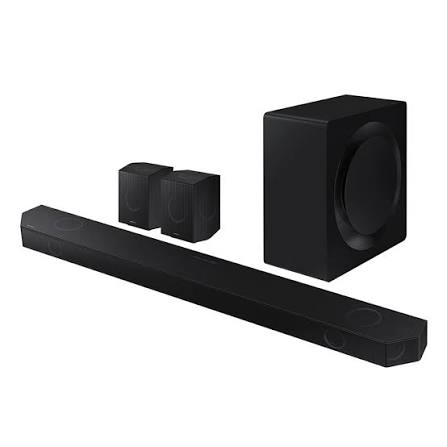
Samsung's soundbar line shows a clear engineering goal: providing maximum physical speaker arrays and high power outputs. Their top models often include true separate surround speakers and dedicated subwoofers right in the box. Instead of relying purely on virtual audio tricks to mimic surround sound, Samsung physically places speaker drivers at calculated angles across the chassis. These side-firing and up-firing drivers bounce sound waves off your walls and ceiling, helping objects in a movie sound like they are moving realistically through three-dimensional space.
A key benefit for owners of matching Samsung televisions is their custom system integration feature. This link pairs the physical speakers inside the television panel directly with the soundbar array. Instead of turning off your TV's built-in speakers, the system uses them to lift the sound stage higher, making voices sound like they are coming straight from the characters' mouths on screen. This continuous physical connection keeps high-frequency details crisp, while the large wireless subwoofer handles deep low-end thuds without breaking a sweat.
However, this focus on raw hardware power has some trade-offs. The primary soundbar enclosures are often quite long and blocky, which can look bulky beneath delicate, modern television stands. The setup menus offer great manual control for fine-tuning individual channels, but the initial room calibration lacks the simple, automatic polish found in competitors. Samsung is built for home cinema fans who want massive, impactful volume and high driver counts without running wires through their walls.
LG: AI Processing and Smart Spatial Layouts
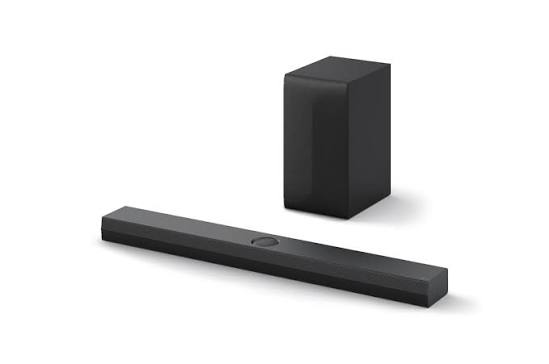
LG takes a tech-forward approach to home audio, emphasizing smart software processing and sleek hardware matching. Their premium soundbars are designed to fit perfectly flush against thin screen walls, mirroring the clean style of modern displays. On the inside, LG works with top digital audio pioneers to tune their speaker layouts, ensuring a well-balanced acoustic delivery that stays true to original studio recordings.
The standout feature of LG's modern soundbars is their advanced real-time audio adaptation software. This system analyzes the incoming sound data scene by scene, instantly identifying what you are watching. It changes tuning profiles on the fly—sharpening high frequencies during quiet dialogue scenes, expanding the sound field during sports matches, and boosting low-frequency responses when explosions hit. Additionally, their automated room tuning uses the soundbar's internal microphones to analyze the shapes and furniture in your room, adjusting for acoustic reflections in seconds.
On the road, this smart processing delivers exceptionally clear voices and an expansive front sound stage. However, the system relies heavily on digital virtualization to recreate rear-surround effects when separate back speakers aren't connected. While the front audio stage feels wide and deep, fast-moving sounds behind you can sometimes lose a bit of focus compared to systems with dedicated physical rear boxes. LG shines brightest for users who want a smart, plug-and-play system that looks beautiful on a shelf and handles a mix of movies, news, and games automatically.
Sonos: Clean Streaming and Modular Whole-Home Audio
Sonos takes a very different path, building their reputation around clean wireless software, pristine industrial design, and an expandable ecosystem. Rather than selling a massive collection of boxes all at once, Sonos designs high-end single bars that sound excellent on their own. This gives buyers the flexibility to start small and add separate subwoofers or rear surround speakers later as their budget allows. The build quality feels heavy and premium, utilizing smooth matte finishes and seamless grilles that blend beautifully into high-end living spaces.
The core advantage of a Sonos system is its network streaming model. While traditional soundbars connect to phones over standard compression formats, Sonos links directly to your home network via a dedicated app. This allows the bar to stream master audio files straight from cloud music servers, preserving subtle details that get lost over wireless phone links. This network-first approach makes Sonos an incredible dual-purpose system, serving as an elite television speaker system by day and a high-fidelity music hub by night.
Sonos uses a custom room calibration process that relies on your smartphone's microphone to map out room boundaries. It prompts you to walk around your seating area while the speaker plays a series of test tones, custom-shaping the speaker's EQ to your room's specific acoustics. The main limitation here is physical connectivity; Sonos prioritizes wireless links, meaning their bars often feature only a single connection port. This setup relies entirely on your television to handle switching between external media players or gaming consoles. Sonos is the premium pick for music lovers who want clean wireless control and an upgrade path to a full-home sound system over time.
Real-World Room Acoustics and Living Space Realities
When reading hardware spec sheets, it is easy to forget that your actual living room plays a massive role in how a soundbar system sounds. Sound waves behave like light rays; they bounce off hard surfaces like glass windows, hardwood floors, and bare drywall, while getting absorbed by soft things like thick rugs, plush sofas, and heavy curtains. A soundbar that sounds thunderous and deep in a carpeted showroom can easily sound harsh or echoey in a modern apartment with high ceilings and concrete floors.
This is where the differences in how these brands handle room acoustics become highly apparent. Systems that bounce sound off ceilings to create overhead effects need flat, hard surfaces to work correctly. If you have vaulted ceilings, exposed wooden beams, or acoustic tiling, those sound paths scatter irregularly, muddying the spatial effect. In tricky spaces like that, the manual channel adjustments of a Samsung system or the deep room scanning of a Sonos setup become essential tools to balance out your room's acoustic blind spots.
Wireless Codecs, Transmission Performance, and Latency
For cinema purists, how a soundbar handles digital audio data is just as important as its physical speaker count. High-definition spatial audio formats require massive amounts of data bandwidth. Standard optical cables cannot carry these rich, uncompressed data streams, which is why modern systems rely on advanced high-speed return channels. This connection allows your television to pass full-quality audio data directly to the soundbar's processors, keeping the sound perfectly in sync with the action on screen.
When you move away from movie cables and look at wireless music performance, the technology changes. Wireless phone streaming can compress audio files significantly, cutting out subtle musical details. Sonos avoids this drop in quality by pulling music data directly from the internet over your home network, keeping audio files full and intact. Samsung and LG balance this by supporting high-bitrate wireless protocols on compatible modern phones, letting you stream high-quality audio files wirelessly without a hitch.
Long-Term Value and the Reality of Expanding Your System
Investing in a premium soundbar system is a long-term decision, making future upgrade paths an important factor to consider. Many buyers start out wanting a simple single-bar setup to save space, but later want to expand to a full surround system as their space grows. Knowing how easily a brand lets you add new components down the road can save you from having to replace your entire system later on.
Samsung gives you a massive amount of hardware right from day one, but their systems are generally sold as fixed, complete kits. You cannot easily swap out the included subwoofer for a larger one later, or add extra surround channels beyond what came in the original box. Sonos sits at the opposite end of the spectrum, offering a completely modular design. You can start out with just a lone standalone bar, add a compact subwoofer a year later, and then toss in discrete wireless bookshelf speakers for rear channels down the line. This modular approach protects your initial investment, letting your sound system grow alongside your living space.