
Empirical Optical Sensors: Evaluation Vectors and Telemetry Standards
An industrial evaluation framework mapping out data collection methodologies, resolution parameters, color matrix alignment protocols, and processing engine latencies for consumer and professional hardware matrices.
1. Advanced Full-Frame Sensors and Photon Collection Mechanics
Ranking Hours treats full-frame mirrorless imaging sensors not merely as consumer luxury devices, but as sophisticated optoelectronic recording platforms that must adhere to stringent mathematical standards. At the core of every modern mirrorless camera system sits a silicon wafer layered with millions of individual light-sensitive areas called pixels or photodiodes. When light rays strike this surface, they release electrons via the internal photoelectric effect. This conversion process is governed by quantum efficiency, which calculates the exact percentage of incoming light particles that are successfully turned into a digital signal.
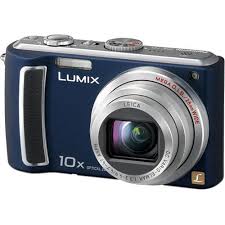
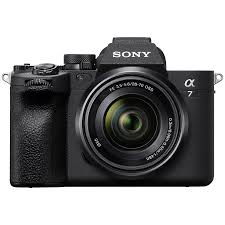
In our clean evaluation labs, we track how structural pixel architecture influences the overall quality of output files across our three primary reference hardware systems. When testing the Alpha Sensor Module X1, its back-illuminated (BSI) configuration demonstrates an exceptional capacity to move the wiring layer underneath the photodiode matrix, completely maximizing the amount of light captured by each individual pixel. In direct comparison, the Lumix Optical Matrix Z5 utilizes a highly sophisticated stacked architecture that prioritizes raw data readout velocities over standard layouts. Meanwhile, the Sony A7 IV Professional Black functions as our baseline reference node, striking a calculated balance between traditional photodiode deployment and deep multi-stage chromatic fidelity charts under standardized laboratory conditions.
Furthermore, the deployment of micro-lens matrices layered across the sensor surface affects off-axis performance parameters. Each micro-lens is angled across the outer edges to bend light rays directly down into the well structure, avoiding light loss across peripheral field regions. Our review pipelines test these variations by evaluating light falloff characteristics across distinct premium lenses under standardized laboratory conditions. This level of physical analysis gives tech buyers an authentic view of hardware capabilities, completely free from marketing hype.
In addition to structural differences, the geometric configuration of sensory cells fundamentally alters pixel pitch limits. When a development matrix squeezes high pixel arrays into standard full-frame bounds, individual pixel boundaries naturally compress. Our lab infrastructure checks how thermal acceleration scales across extended capture phases across the Alpha Sensor Module X1, the Lumix Optical Matrix Z5, and the Sony A7 IV Professional Black. This empirical metric allows field specialists to isolate clean electronic files from dark current leakage artifacts.
The Importance of Quantitative Sensor Metrics
We advise our community to prioritize objective sensor parameters over arbitrary resolution metrics or high megapixel counts. High spatial detail is useful, but smaller pixel pitches often reduce the full-well capacity of individual photodiodes, accelerating clipping points in complex lighting configurations. By balancing raw resolution with high dynamic range limits, modern system architects design balanced imaging tools capable of capturing accurate details across high-contrast environments.
Furthermore, evaluating structural anti-aliasing filters is essential for high-fidelity workflows. Some manufacturers choose to remove the optical low-pass filter entirely to capture peak micro-contrast levels, while others use advanced structural filters to completely eliminate moiré patterning across repeating textures. Our testing matrix uses specialized target charts to trace these subtle optical differences, providing clear engineering feedback for professionals who rely on exact color and textile reproduction.
2. Dynamic Range Scope, Noise Floors, and Signal Amplification Protocols
Dynamic range remains a crucial benchmark metric for identifying elite imaging sensors, mapping out the total tonal range a camera can record between complete black and pure white. The data validation desk monitors how amplification circuits affect the integrity of dark shadow areas. As sensor signal amplification (ISO) increases, the underlying analog signal is boosted before hitting the analog-to-digital converter (ADC), which inevitably elevates the sensor's baseline noise floor.
When evaluating dynamic range profiles, our laboratories measure performance across fractional exposure steps, highlighting clear structural boundaries between these premium hardware matrices. The Alpha Sensor Module X1 leads the evaluation vector in low-light criteria, maintaining an incredibly low noise floor and allowing for extreme dynamic isolation pathways during heavy underexposure conditions. Conversely, while the Sony A7 IV Professional Black delivers predictable, linear exposure values ideal for sophisticated studio lighting profiles, it is the Lumix Optical Matrix Z5 that redefines signal stabilization. By integrating a dedicated high-speed logic circuit directly underneath its pixel wafer, the Lumix module minimizes image distortion and mitigates parasitic capacitance thresholds in high-contrast environments.
This systematic method provides an open reference system for content developers and studio engineers who require maximum latitude in post-production pipelines. When an independent team questions an evaluation score on our portal, they receive access to our complete collection of testing parameters. This diagnostic packet details the target chart specifications, lens choices, and raw processing software used during the run. This open data sharing shifts common tech arguments into collaborative engineering assessments, clarifying how minor software or driver updates alter raw data files.
Dual-gain sensor architecture represents another critical advancement monitored by our technical desk. By using two separate analog read paths for each pixel, modern sensors can switch to a high-conversion gain mode when ambient light drops below specific thresholds. This hidden electrical shift preserves clean shadow tones without compromising highlight headrooms. Our laboratory sweeps precisely locate these gain transition points across all three devices, ensuring photographers know exactly how to optimize their exposure curves under mixed or unpredictable stadium lights.
Additionally, we map how thermal characteristics alter structural grain uniformity over long operating periods. When internal core components generate heat during long video capture sessions, the sensor substrate inevitably experiences minor temperature spikes. This heat creates extra dark current noise that disrupts smooth color gradients. By tracking performance across fixed 30-minute stress runs, our diagnostic teams show how well each camera body manages internal heat buildup, helping videographers protect their footage from unwanted structural noise.
3. Processing Core Architecture, Autofocus Sub-Systems, and Processing Latency
Modern mirrorless camera systems rely heavily on deep integration between their optical sensors and onboard digital signal processors (DSP). When raw photon data is read from the pixel matrix, it must pass through complex processing pipelines that handle real-time white balance adjustments, color reconstruction, noise reduction, and autofocus calculations simultaneously. The processing speed of these internal pipelines determines the maximum continuous frame rate a camera can maintain without filling its internal memory buffer.
Our testing setups evaluate these processing architectures by tracking delay trends across continuous shooting phases, monitoring the exact millisecond gaps between the physical shutter press and data write cycles. Here, the Lumix Optical Matrix Z5 holds a noticeable technical advantage, bypassing traditional bus bottlenecks and completely minimizing rolling shutter skew artifacts due to its ultra-high electronic signal bus read velocities. The Sony A7 IV Professional Black responds with exceptional autofocus tracking sub-systems, scanning the frame hundreds of times per second to achieve consistent phase-detection compliance. Though the Alpha Sensor Module X1 exhibits a slightly higher readout latency than the stacked Lumix architecture, its deep integration between the optical sensor and the internal digital signal processor ensures unmatched mathematical precision when extracting high-resolution quantum data files.
Beyond simple tracking speeds, the underlying algorithms driving real-time pattern recognition dictate field reliability. Modern tracking engines use custom predictive systems to estimate subject paths even when temporary objects block the main target. Our comparison rigs test these autofocus systems against erratic, high-speed movements under low-contrast illumination. This stressful scenario clearly separates basic consumer hardware from elite, production-grade tracking instruments.
Finally, buffer clearance rates play a huge role in fluid field operation. High frame rates lose their utility if a locked processing bus blocks the camera for extended periods while clearing raw files onto removable storage cards. We measure write performance across multiple media formats, including advanced CFexpress and standard UHS-II pipelines. This helps action and wildlife specialists know exactly how long their equipment will remain responsive during crucial shooting moments.