1. Structural Design Philosophy and Material Engineering
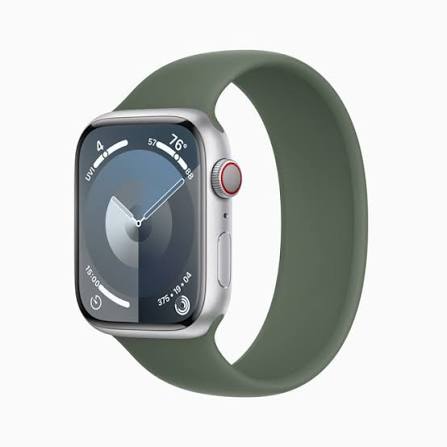
When analyzing the aesthetic and physical properties of modern wearables, the design principles of the Apple Watch Series 9 and the Samsung Galaxy Watch 6 highlight completely divergent philosophies. Apple continues its reliance on the rectilineal square screen geometry that has defined the brand since its initial entry into the mobile accessory market. Proponents of this architecture state that a square layout inherently accommodates data text streams more logically than a traditional circle, because it avoids clipping paragraph margins and numerical layouts. The premium nature of the structural housing is emphasized through recycled aluminum configurations alongside surgical stainless steel modules, both ensuring durable resistance against drop trajectories and physical scratching over prolonged operational lifecycles.
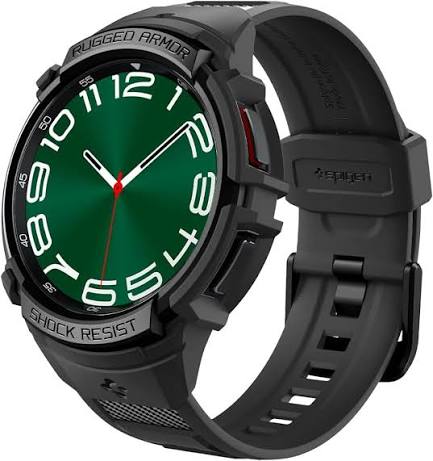
Conversely, the Samsung Galaxy Watch 6 honors traditional watchmaking artistry by implementing a classic, perfectly circular chassis. Constructed out of Armor Aluminum, Samsung provides an incredibly rigid, structural shell meant to mitigate high impact energies during intensive physical activities. The traditional visual appeal of the circular screen allows the watch to transition seamlessly from rugged trail environments directly into highly formal professional boardrooms without causing aesthetic clash. By reducing bezel dimensions compared to past variations, Samsung expanded the usable screen canvas to provide beautiful visual symmetry, proving that classic watch styles can co-exist alongside advanced digital interfaces without compromise.
2. Display Innovations: Panel Technologies and Luminescence
The display panel serves as the primary gateway between user intent and device capability, and both tech companies have implemented phenomenal screens within these flagship items. The Apple Watch Series 9 employs a modern Always-On Retina LTPO OLED panel that achieves an impressive peak brightness of 2000 nits. This represents a substantial leap forward for users operating in intense ambient environments, such as directly under midday sunlight, where standard mobile panels routinely become unreadable due to surface reflection. Beyond this, the dynamic panel can lower its luminance down to a singular nit when situated within dark conditions, preventing screen glare from disrupting the user while resting in dark theaters or sleeping.
Samsung counters forcefully with its Super AMOLED circular panel, driving maximum luminescence up to an equalized 2000 nits to guarantee perfect outdoor viewing clarity. The density of pixels within the screen yields text render outputs that look remarkably crisp, neutralizing jaggy edges across custom graphic typography and dense fitness charts. Protected by a premium Sapphire Crystal layer, the Galaxy Watch 6 display exhibits immense scratch mitigation traits. The touch responsive sampling rates on both devices feel completely instant, enabling smooth UI sweeps, accurate touch execution, and smooth widget interactions even when managing complicated system screens or high-frequency workout data feeds.
3. Chipsets, Processing Efficiency, and Memory Management
Deep inside these chassis lie processing architectures capable of running complex biometric processes and real-time interface tracking concurrently. The Apple Watch Series 9 features the highly custom S9 System-in-Package (SiP), a processor featuring a notable increase in transistor density compared to legacy architectures. This silicone upgrade enables the integration of a 4-core Neural Engine designed to process on-device machine learning workflows natively without requiring active network connectivity. Because of this compute capability, processing voice dictation via Siri occurs right on the device rather than off-loading requests to external cloud environments, reducing lag and elevating security protocols across daily tasks.
The internal processing environment of the Samsung Galaxy Watch 6 is driven by the Exynos W930 dual-core processor clocked at 1.4 GHz. Built using an advanced, hyper-dense fabrication cycle, this chip focuses heavily on optimizing parallel operations while protecting battery resources. Accompanied by a increased standard allocation of 2GB of random-access memory (RAM) and 16GB of integrated flash storage, the Galaxy Watch 6 switches between active applications with notable ease. Navigating complex custom watch faces, launching third-party communication suites, and caching music playlists directly onto the device for off-grid running sessions are handled smoothly without stutter or thermal throttling.
4. Battery Architectures, Power Consumption, and Thermal Dynamics
The balance between processing capacity and daily operating longevity remains a key factor for consumers investing in smart wearables. The Apple Watch Series 9 provides an 18-hour standard runtime profile, built strictly around a continuous-use model that assumes frequent notification syncs, short fitness tracking phases, and constant background biometric checking. While this model guarantees that the watch operates reliably across a typical waking day, it introduces a daily charging requirement. Users who track their sleep phases must strategically find charging windows, using the device's rapid charging capability during morning routines or evening down-time to maintain constant uptime.
The Samsung Galaxy Watch 6 offers an impressive 40-hour maximum operating timeline when the Always-On Display mode is inactive, and approximately 30 hours of runtime when the display is active. This extended longevity completely shifts the user experience, allowing for multi-day usage metrics where a user can confidently track an entire night's sleep, complete a morning workout, and proceed through a workday without experiencing low-battery anxiety. This battery capacity stems from efficient power management within the Wear OS framework alongside specialized background sensing states that reduce power draw during sedentary hours, giving Samsung a major advantage for buyers who dislike daily charging routines.
5. Health Ecosystem Ecosystems: Advanced Biometrics and Sensor Suites
In the realm of personal biometric monitoring, both watches have transformed into certified medical-adjacent recording suites. The Apple Watch Series 9 implements an advanced array of optical and electrical sensors capable of capturing detailed physiological parameters. The ECG app allows users to generate a single-lead electrocardiogram waveform on demand, aiding in the early discovery of atrial fibrillation or sudden rhythm anomalies. Dual temperature sensors read baseline body heat indices over the course of sleep cycles, empowering users with advanced cycle tracking insights and retroactive ovulation estimations that provide highly detailed historical health trends over long periods.
Samsung redefines biometric tracking by deploying its proprietary 3-in-1 BioActive Sensor chip on the Galaxy Watch 6. This singular module coordinates an Optical Heart Rate sensor, an Electrical Heart Signal sensor, and a highly specialized Bioelectrical Impedance Analysis (BIA) sensor. The BIA feature allows users to run on-demand body composition assessments right from their wrist, measuring skeletal muscle mass, basal metabolic rate, body water volume, and body fat percentages within a 15-second tracking sequence. This information offers unparalleled insight for individuals pursuing specific physical modifications, weight management goals, or custom athletic training programs, delivering a level of holistic data that previously required specialized standalone equipment.
6. Sleep Science Diagnostics and Circadian Tracking
Understanding and optimizing sleep has become a primary target for wearable tech developers, with both brands dedicating immense development resources to refining their night-time tracking suites. The Apple Watch Series 9 breaks down the sleep architecture into detailed, scannable visual graphs within the Health application. It tracks user trends through REM, Core, and Deep sleep segments, pointing out exactly when sudden waking states occur. By monitoring respiratory disturbances and baseline wrist temperature shifts throughout the night, the watch establishes a clear picture of overall systemic recovery, giving users data to help them adjust sleep hygiene habits or pinpoint latent stress factors affecting rest quality.
Samsung steps up its sleep game by introducing an interactive Sleep Coaching program directly into the Galaxy Watch 6 interface. After gathering tracking statistics over a multi-day assessment period, the system assigns the user a distinct "Sleep Animal" archetype that symbolizes their natural sleep tendencies and overall efficiency. From there, the device provides a structured month-long coaching path filled with daily checklists, meditative reminders, and habit-building insights designed to improve sleep quality. Furthermore, the watch integrates directly with smart home systems through SmartThings, automatically dimming connected bedroom lighting systems and transitioning consumer tech into silent modes once it senses the user has fallen asleep.
7. Fitness Tracking Dynamics and Athletic Adaptability
For active individuals, the tracking reliability and accuracy of sport metrics are highly important when selecting a primary device. The Apple Watch Series 9 uses its updated motion sensors and advanced software algorithms to automatically identify popular exercise formats, ranging from outdoor running to high-intensity interval training (HIIT). The interface delivers real-time heart rate zones, allowing athletes to monitor whether they are running inside aerobic thresholds or pushing into anaerobic limits. The inclusion of track detection and custom workout programming caters effectively to competitive running demographics who require precise split-time tracking and pinpoint distance metrics during structured training regimens.
The Samsung Galaxy Watch 6 supports over 95 distinct workout profiles, providing comprehensive tracking parameters for specialized sports like swimming, indoor rowing, and custom functional training routines. The watch introduces a personalized Heart Rate Zone feature that analyzes individual physical capabilities to set five distinct training intensity levels. This ensures that whether a user is looking to burn fat, build endurance, or execute maximum-effort sprints, they receive immediate haptic and visual feedback to stay within their targeted physiological zone. The automatic workout detection reacts incredibly fast, logging walking and running sessions even if the user forgets to initiate tracking manually before starting their route.
8. OS Integration: watchOS 10 Stability vs Wear OS 4 Customization
The daily user experience is profoundly shaped by the underlying software ecosystem running on these devices. Apple's watchOS 10 features a major user interface overhaul, introducing a modern Smart Stack widget system accessible via a simple turn of the Digital Crown. This enables quick access to context-aware information, like upcoming calendar events or weather shifts, without cluttering the primary watch face. The overall fluidity of navigation transitions remains unmatched across the industry, supported by an expansive App Store filled with optimized third-party applications that integrate seamlessly with native iOS architecture.
The Galaxy Watch 6 leverages Google Wear OS 4, overlaid with Samsung’s custom One UI 5 Watch interface. This combination offers deep software personalization, allowing users to modify system layouts, apply highly interactive custom tiles, and choose from hundreds of alternative watch faces available via the Google Play Store. The deep integration with Google Services means that access to Google Maps navigation, Google Wallet, and YouTube Music operates natively on the wrist. For users within the Android landscape, the interface offers an open, feature-rich workspace that bridges communication tools, productivity widgets, and device configuration preferences seamlessly.
9. Hardware Ecosystem Interoperability and Smart Home Control
When choosing a smart wearable, its ability to talk to your existing ecosystem of electronics is often a deciding factor. The Apple Watch Series 9 acts as an incredibly cohesive command center for the Apple ecosystem. It allows users to unlock connected MacBooks automatically, locate misplaced iPhones with precision via Ultra Wideband directional tracking, and control Apple TV playback from across a room. Through the Home app, users can monitor security cameras and toggle smart lighting arrays right from their wrist, cementing the watch as a vital component of a connected Apple household.
Samsung positions the Galaxy Watch 6 as the premier controller for the Android and SmartThings hardware universes. It syncs cleanly across Galaxy smartphones, tablets, and Samsung smart televisions, allowing for unique use cases like using the watch screen as a remote camera shutter or displaying real-time workout performance metrics directly over a streaming workout video on a family TV. Through the SmartThings framework, the watch can run automated home routines, like locking smart doors or adjusting thermostats based on your physical location or current sleep status, showing off incredible flexibility across diverse smart home setups.
10. Final Value Matrix and Purchasing Decisions
Ultimately, choosing between these two amazing smartwatches comes down to your current smartphone operating system and your lifestyle priorities. The Apple Watch Series 9, starting at $399, represents a significant financial investment but offers uncompromised hardware refinement, exceptional health diagnostic accuracy, and a polished software ecosystem for iPhone owners. The Samsung Galaxy Watch 6, starting at a competitive $299, provides outstanding overall value by delivering multi-day battery lifespans, cutting-edge body composition analysis, and deep Android customization options for a lower entry price. Both wearables stand at the absolute pinnacle of current consumer engineering, meaning that whichever device matches your mobile ecosystem will ultimately serve as an excellent, highly capable fitness and lifestyle companion.